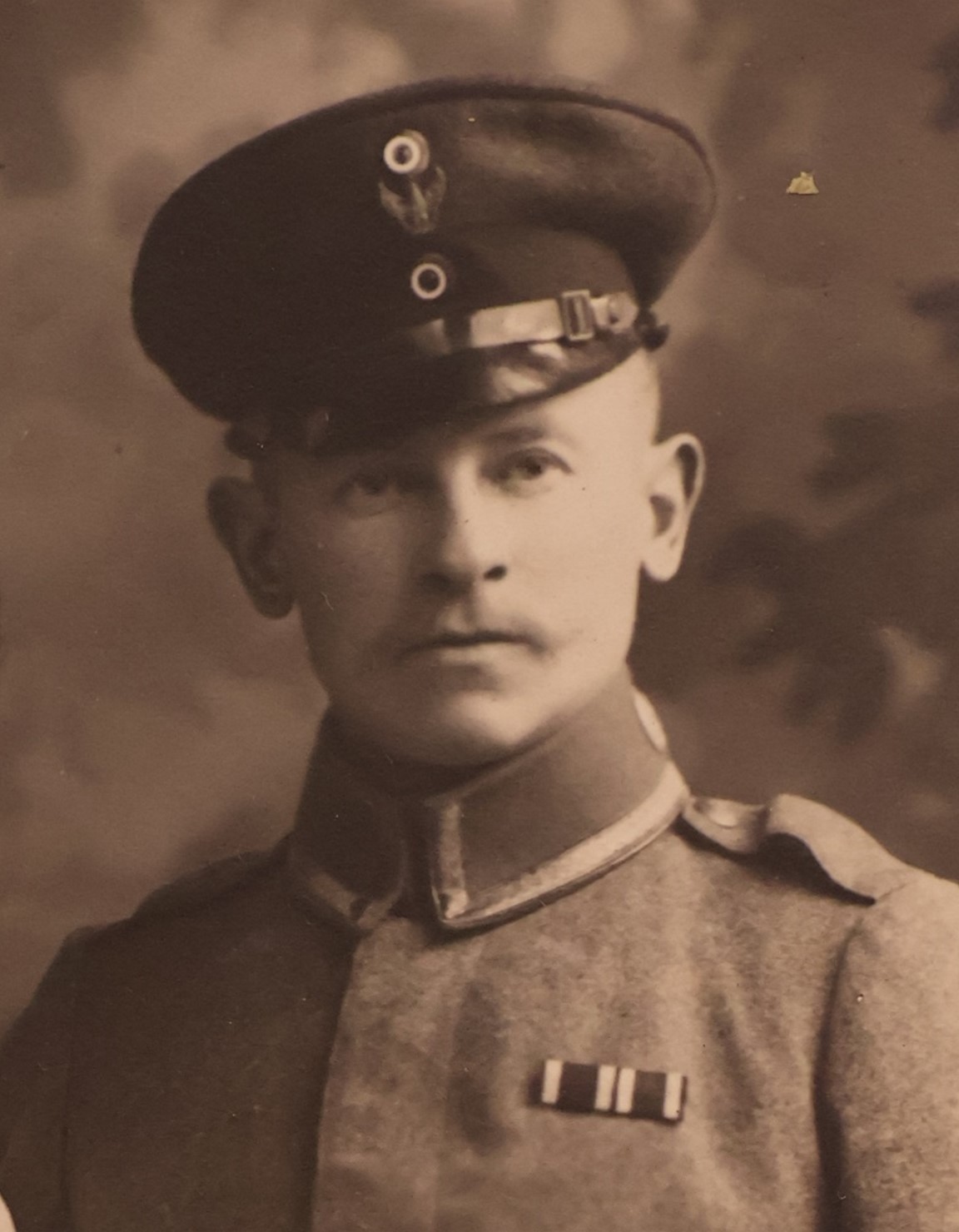
Otto Zoberbier’s
My Journey through the Orient
translated into English from Werner Zoberbier’s German edition (version “WZ“) of his father Otto Zoberbier’s handwritten version (“²OZ“, the so-called “Zweitschrift”)
Translation drafted with the help of DeepL and GPT (UiO), proof-read by Kathinka Zoberbier and Stephan Guth
Annotated by Stephan Guth
Epilogue (in lieu of a foreword)
<p6a>4 Baghdad
On 13 March at 4 pm, after 963 kilometres, we had completed the 17-day journey. It was rainy when we arrived in Baghdad in the evening. Even from a distance, we could see the mosques and minarets shining out of the palm groves, and by the time we reached the Tigris, it had become quite late. The river was in flood and the wooden pontoon bridge that crossed the Tigris had been raised dangerously. The road up to the bridge was very steep and also slippery. The bridge railings were made of ropes. When barges came, which was not often, the bridge was pulled apart and the barges could pass.
The first wagon with the sick captain had happily made it onto the bridge. Next it was the turn of our wagon. Because the wait was getting too long, I and my comrade got out. The horses of our wagon were almost on the bridge when one horse slipped, dragging the other with it, and both horses, including the coachman, fell into the river. The police immediately helped to free the horses from the wagon so that they and the coachman could swim to the shore. Fortunately, the carriage was still on the bank and could be pulled onto the bridge. If we had still been sitting in the carriage, it could have been fatal for us. A sugar loaf and my comrade’s rifle were kept by the Tigris.
It was already too late to head for the German communications zone. We delivered the sick captain to the military hospital, but we spent the night in our carts and did not hand over our transport to the back area until the next morning. In our new quarters we had a big clean-up, and above all we enjoyed a warm bath. Here we met some comrades again who had been in Baghdad for a few weeks and already had their post here. We were given food in the ration house, which was good and very nicely furnished. We were served by Russian prisoners of war – Volga Germans – who had fought on the Turkish-Russian front.[65] In the evening we went to the Franzow Hotel, a German hotel.[66] Here we ate very well and at a reasonable price for us. The whole meal, consisting of 4 courses, cost 8 piastres (1,60 marks). Many of the local Germans came here in the evenings to spend the evenings with us. At the time, there were 8-10 German soldiers in Baghdad, and that was something special for the resident Germans.
We made the most of Baghdad. We strolled through the bazaars, ate and drank well, <p6b> bought too many things we liked and later threw them away again – or, if we were lucky, sold them. The old caliph city lies paradisiacally on the Tigris amidst large palm groves and fruit plantations. We marvelled at the large mosques with their gilded domes and minarets. The cause for many a picture postcard back home.
In the meantime, the back area had bought horses, and each of us could choose one. I chose a blue roan with a tail that reached down to the ground. We now rode in the countryside around Baghdad for a few hours every day to break in the horses. But that is not so easy with an Arabian stallion. The Arab knows only walk or canter, so it was difficult to teach the horse to trot.
The temperature in mid-March was still very pleasant and not much above 30 degrees centigrade. A few months later, when I came back here, it was hell and we had over 60 degrees. But the six days we had to enjoy in Baghdad passed quickly. Because now the preparations for the onward journey began.
On the Way to Baghdad
New Destination: Persia
Notes on ch. 4
[65] Cf. above, at note 56.
[66] ²OZ 31 “Franzo”, WZ 6a “Franzow”. – Not mentioned in any of the references I was able to consult.
 Sergeant Otto Zoberbier’s "Travels in the Orient: Persia and Arabia, 1915–1919"