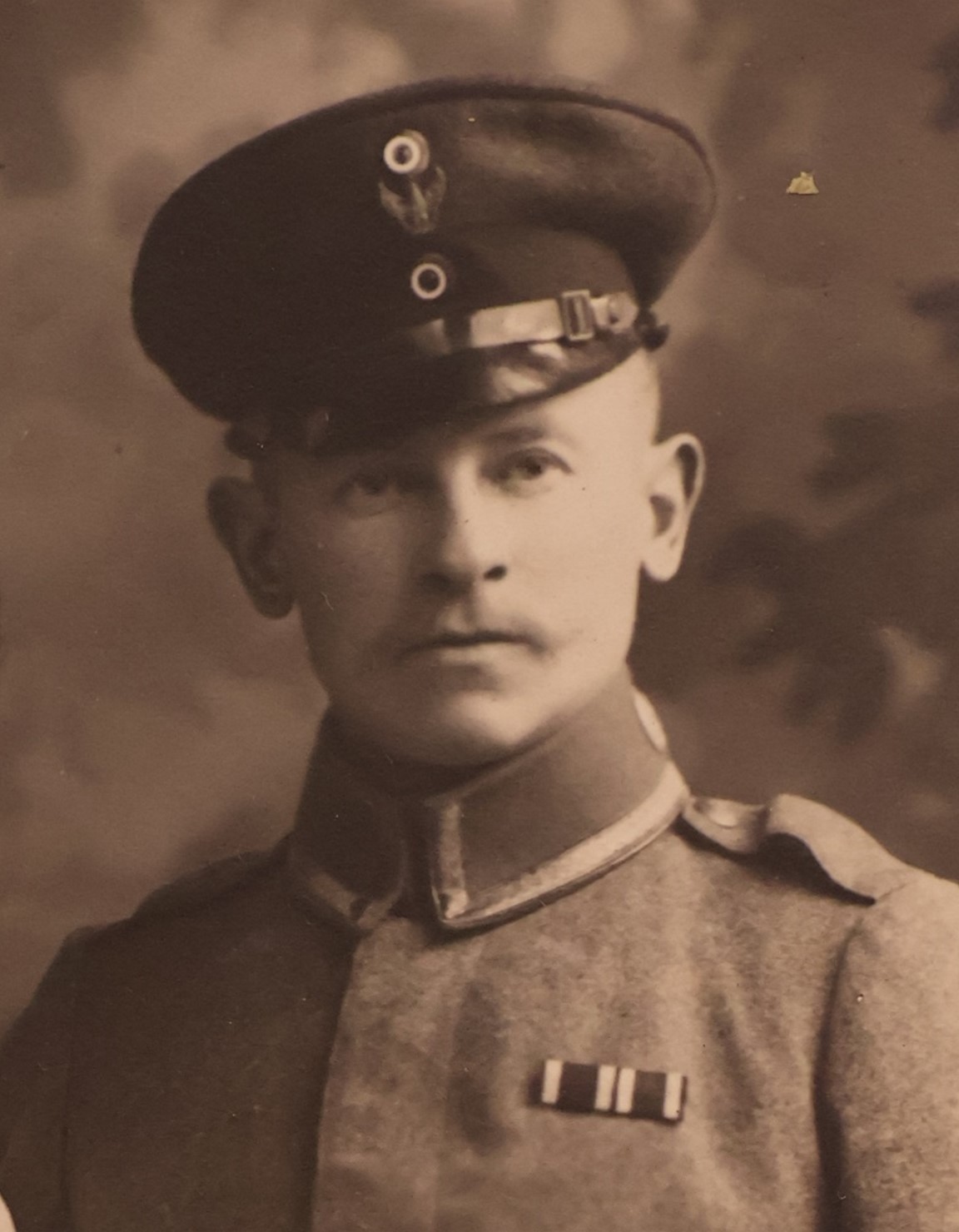
Otto Zoberbier
My Journey through the Orient
translated into English from Werner Zoberbier’s German edition (version “WZ“) of his father Otto Zoberbier’s handwritten version (“²OZ“, the so-called “Zweitschrift”)
Translation drafted with the help of DeepL and GPT (UiO), proof-read by Kathinka Zoberbier and Stephan Guth
Annotated by Stephan Guth
Epilogue (in lieu of a foreword)
NB: This translation is based on a first draft prepared with the help of DeepL and GPT 3.0. The draft was then revised by Kathinka Zoberbier (granddaughter of Otto Zoberbier) and proof-read and finalised by myself (S.G.).
For the history of the WZ version, see below, Werner Zoberbier’s Epilogue (In lieu of a foreword, below), as well as my Editor’s introduction, sections “One account – three (or four?) versions“, and “The sources“.
In lieu of a foreword
The following two paragraphs are actually Werner Zoberbier’s Epilogue to his ‘edition’ of his father Otto’s memoirs. For the German original, see Nachwort in WZ.
<WZ 21b> My father, Otto Zoberbier, had served with the 2nd Dragoons in Schwedt on the Oder river before the First World War. Like his older and taller brother, he had previously volunteered for the Guards Dragoons in Berlin, but unlike his brother, he was not accepted there because he was too short. During his three years of service in Schwedt, he applied for a transfer to the Schutztruppe in German Southwest Africa, but again without success. At the beginning of the war he was immediately drafted, and he took part in the rapid advance in France with his regiment in August 1914. When the cavalry became redundant at the beginning of the trench warfare, he again hoped for an adventurous assignment far away, and he applied for a post with the “Staff von der Goltz,” the liaison staff with the Turkish ally [see Staff]. This time successfully.
After the war, he told about his adventures and was admired for that by everyone. His friends kept asking him to write down his experiences, which he then did. A first notebook, written in German cursive, was read by many and eventually became very tattered. At an advanced age, he copied and revised his account again, because his adventures in Arabia were his greatest experience. To facilitate reading for his grandchildren and great-grandchildren, his records were transferred into typescript.
Werner Zoberbier [early 1980s]
Otto Zoberbier’s War-Time Memoirs
My Journey Through the Orient
Transcribed for his grandchildren and great-grandchildren by his son
Chapters (in WZ’s edition)
NB: The division into numbered chapters and the chapter titles are Werner Zoberbier’s additions. The handwritten ²OZ version does not show any chapter or paragraph breaks at all, filling all available space on every single page from the beginning to the end.
 Sergeant Otto Zoberbier’s "Travels in the Orient: Persia and Arabia, 1915–1919"